Headlight Restoration · Marino RM
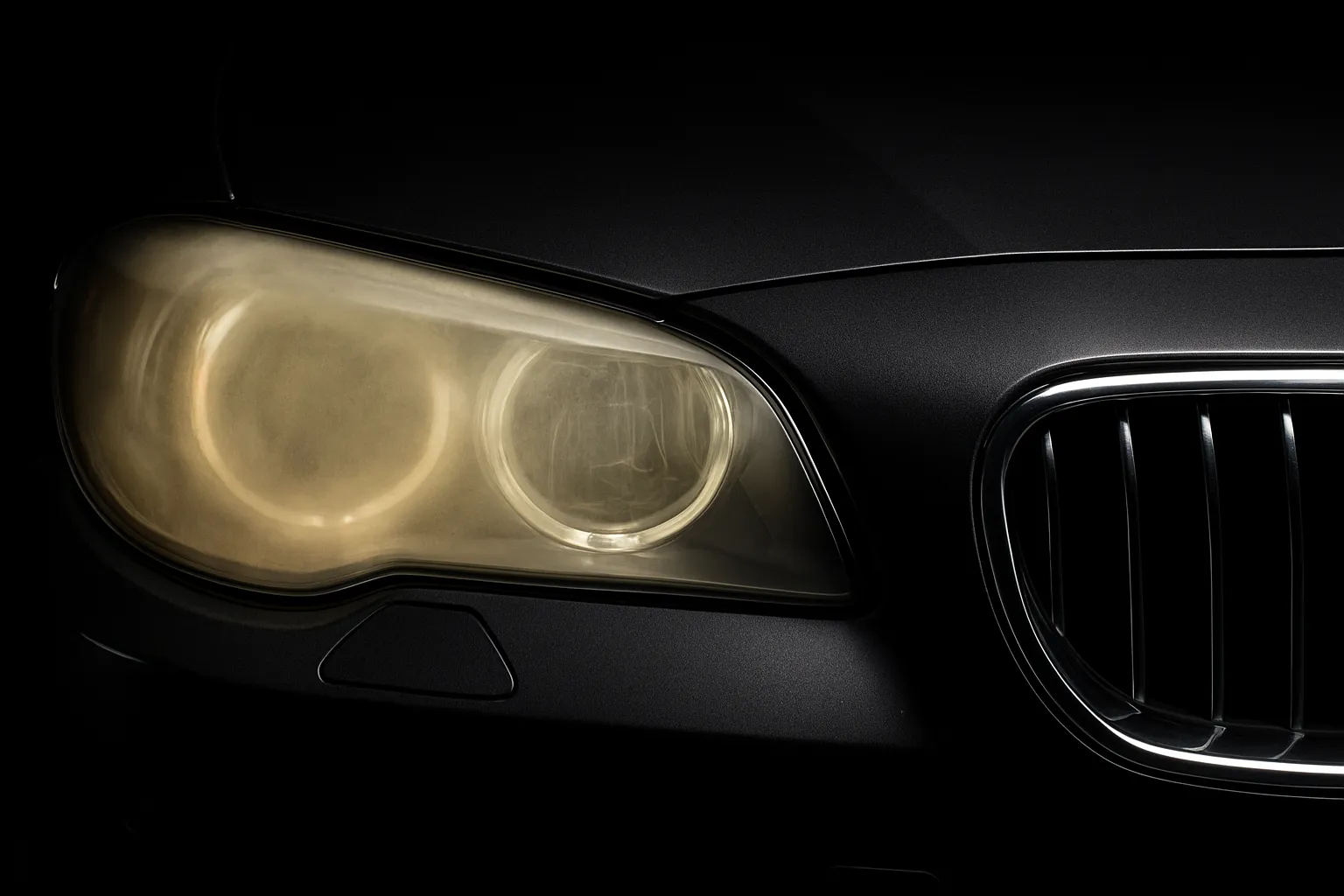
Hazed headlights reduce your light output. Restored headlights look right — and work right.
UV degradation turns clear polycarbonate lenses yellow and opaque over time. This isn't just cosmetic — it measurably reduces the light projected onto the road. We restore clarity and apply a UV sealant that prevents re-hazing. Without the sealant, the lens re-hazes within months.
Not just sanding and buffing. The UV seal is what makes it last.
Polycarbonate headlight lenses degrade from UV exposure over time. The outer surface oxidizes, turning yellow and opaque. Professional headlight restoration removes the oxidized outer layer through a controlled wet-sanding and machine polishing sequence. What most restoration services miss — and what makes the difference between a result that lasts and one that fades back within six months — is the UV sealant applied to the restored lens surface. Without UV protection, the exposed polycarbonate begins to oxidize again almost immediately. We apply a quality UV sealant as the final step. It's the step that makes professional restoration worth doing.
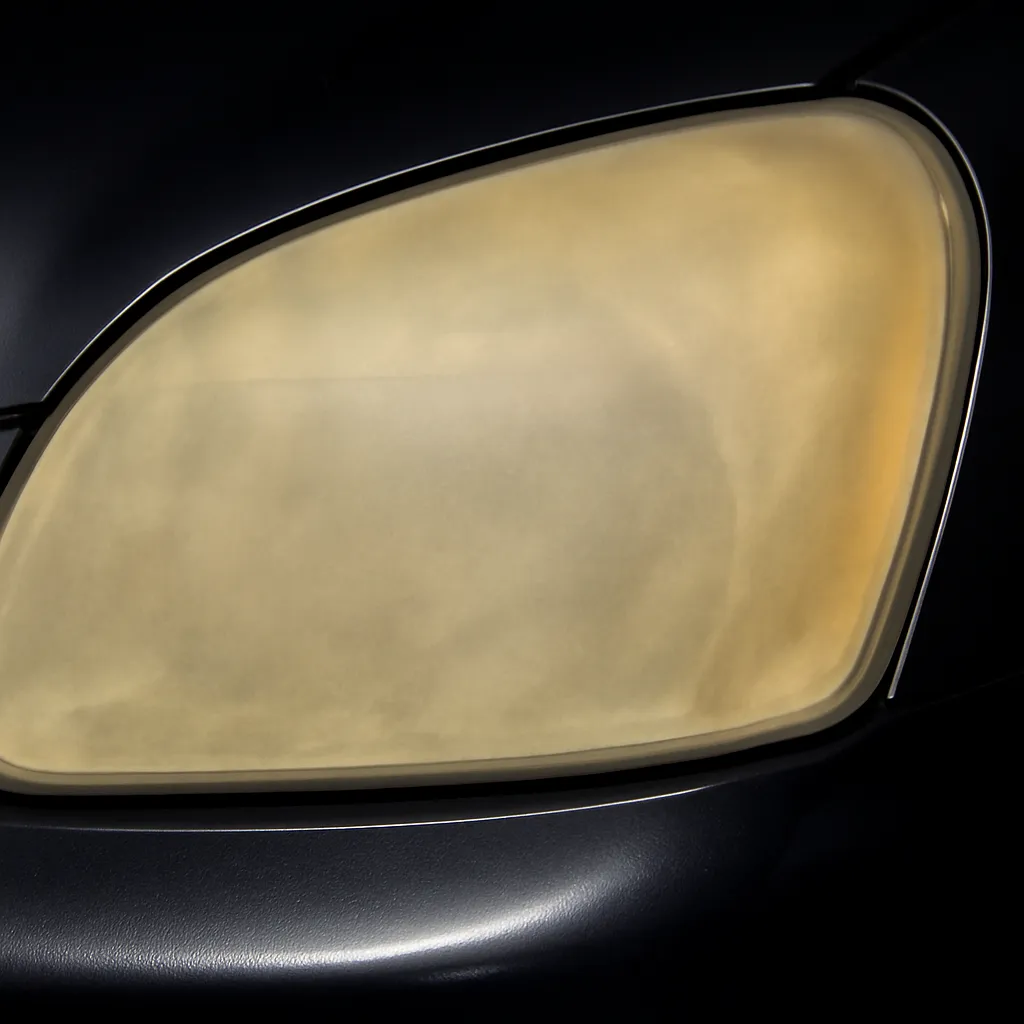
Headlight restoration makes sense if…
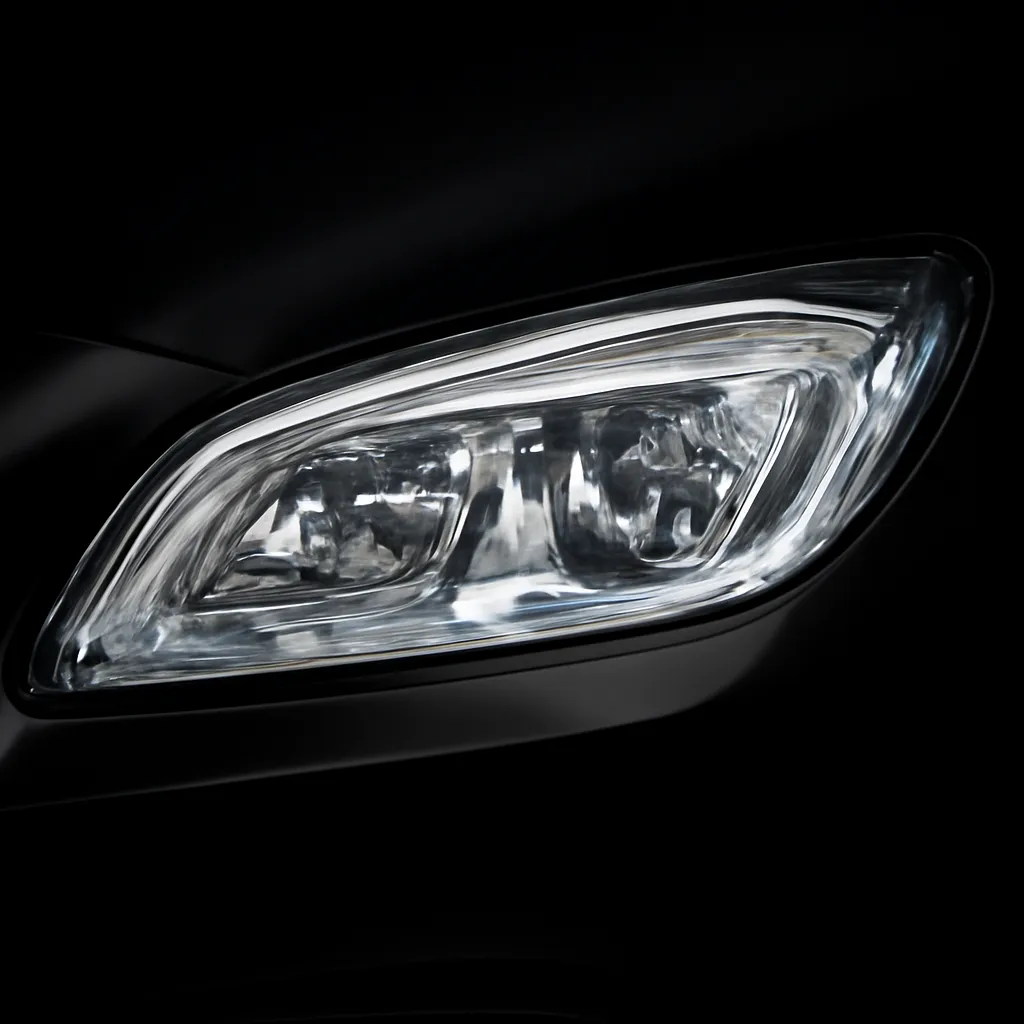
Clarity restored. UV protection applied to keep it that way.
The headlight restoration process.
Both headlights are always done together — mismatched lenses look as bad as hazed ones. Note: restoration addresses UV oxidation of the outer lens surface. Internal condensation, cracked lenses, or deeply scratched lenses may require replacement rather than restoration.
Sand, polish, seal. In that order, correctly.
Inspect and assess
Both lenses examined. Depth of oxidation, any deep scratches, internal issues. We'll tell you upfront if restoration is the right solution or if a lens is too far gone.
Mask the surrounding area
The paintwork around each headlight is masked before any abrasive work begins. No risk of sanding marks on the paint.
Wet sand
Progressive grits remove the oxidized surface layer systematically. We don't rush this — moving through the grades correctly determines the quality of the final polish.
Machine polish
The lens is polished through compound and finishing grades until it's clear. Under studio lighting, clarity is easy to verify.
Apply UV sealant
The single step that makes the difference between a result that lasts and one that fades. UV sealant applied over the restored surface and cured correctly.
Final check
Both lenses in good light. Matched. Clear. UV-sealed. Done.
Timeline
Headlight restoration is typically completed within a few hours. Both headlights in the same visit. It doesn't require leaving the car for a full day in most cases.
Pricing
Headlight restoration is one of our more straightforward services to quote — it's based on the condition of the lenses and the vehicle type. It's also consistently a fraction of the cost of replacement lenses. Get a free quote and we'll give you a specific figure.
Common questions about Headlights.
Related services
Both lenses restored in a single visit.
A fraction of the cost of replacement — and a result you'll notice the first night you drive.